
Expansion Vessels and Why Pressure Keeps Creeping
An expansion vessel absorbs the extra volume that heated water takes up in a sealed system.
An expansion vessel absorbs the extra volume that heated water takes up in a sealed system. It relies on a fixed nitrogen charge behind a rubber diaphragm, and once that charge leaks away the symptoms show up as pressure problems rather than an obvious failure.
What it does
The diaphragm separates a gas-filled chamber from the system water, cushioning the pressure rise as the water heats and expands rather than pushing it out through the relief valve.
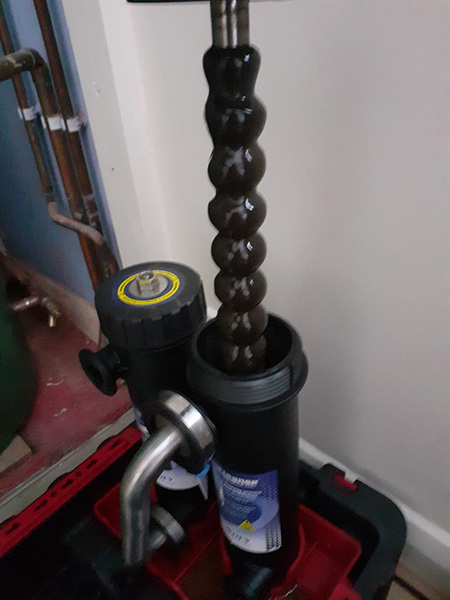
How it fails
The diaphragm perishes or the vessel loses its gas charge slowly over years. Once that happens, pressure rises sharply on heating and the relief valve starts to weep.
Repair or replace
A vessel with a slow charge loss can sometimes be re-pressurised through its Schrader valve. A split diaphragm means the vessel itself needs replacing.
Signs the vessel has failed
- Pressure gauge climbing every time the heating runs
- Water dripping from the pressure relief pipe outside
- Needing to bleed pressure down repeatedly
- Water found at the vessel's charging valve
Who does the work
- Gas Safe registered engineers — registration 554328
- Worcester Bosch accredited installer
- John The Plumb Ltd, company registration 10026483
Get pressure problems diagnosed
Tell us whether your pressure rises, falls, or both, and roughly how often, and we'll narrow down whether the vessel is the cause.
Questions we get asked
Is this something I can check myself?
Checking the pressure gauge is fine to do yourself, but recharging or replacing the vessel is engineer work since it involves the sealed system.
Is expansion vessel work Gas Safe-only?
Not in itself — it's a heating-circuit part — but on a combi it's built into the boiler casing, which does put that work under Gas Safe registration.
Why does my pressure drop rather than rise?
That points more towards a leak elsewhere in the system than the vessel, though a failed vessel can contribute to both patterns over time.