
Common problems
Straight explanations of the faults we're called to most often, written so you know what's likely wrong before anyone quotes you. Every page is written by the engineers who fix them.
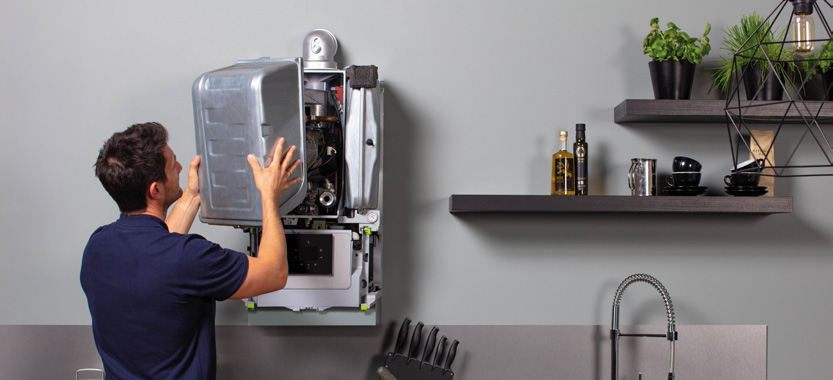
No Hot Water But Heating Works? Here's What's Wrong
When the radiators heat up perfectly but the taps run cold, the fault is almost always in the part of the boiler that switches between the two — not the boiler as a whole. That's good news: it usually means a component repair rather than a replacement. This page walks through what an engineer actually checks, in the order they check it, so you know what you're paying for before anyone arrives.
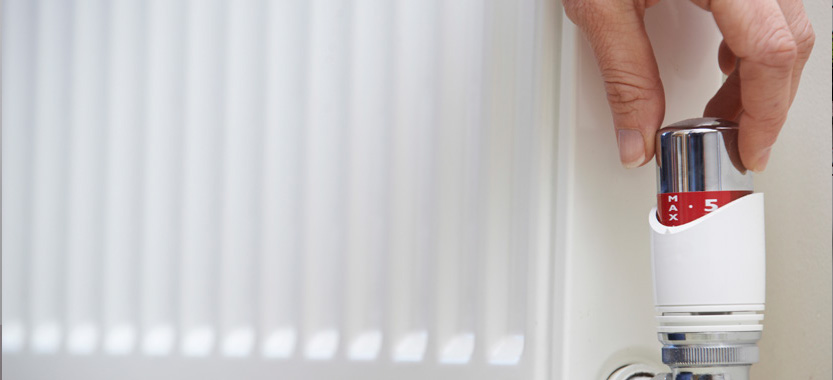
Boiler Losing Pressure: Finding the Real Cause
A sealed heating system should hold its pressure for months. If you are re-filling the boiler weekly, water is leaving the system somewhere — and repeatedly topping up pushes fresh oxygenated water in, which accelerates internal corrosion and sludge. Finding the cause is a short job for an engineer and it saves the much larger bill that follows years of top-ups.
Radiators Cold at the Bottom: Sludge, Not Air
Where a radiator is cold tells you what's wrong with it. Cold at the top and warm at the bottom is trapped air and a bleed key fixes it. Cold at the bottom with a hot top is magnetite sludge lying in the base of the panel, and bleeding will do nothing at all. This page explains the difference, what a proper clean involves, and when a flush is worth paying for.
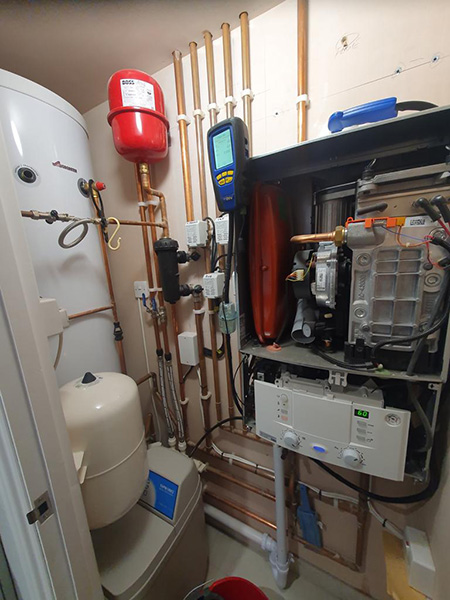
Boiler Keeps Locking Out or Needs Resetting
Pressing reset is not a repair — it clears a safety lockout that the boiler applied deliberately. If you are resetting daily, the appliance is repeatedly detecting a condition it is designed to shut down for. Understanding which lockout you have makes the difference between a small part swap and a genuinely unsafe situation.
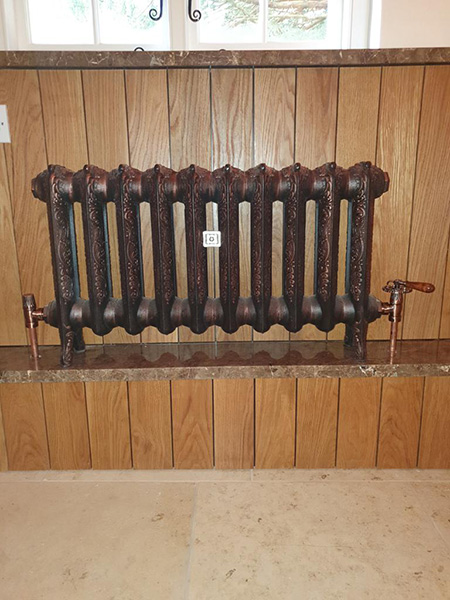
Frozen Condensate Pipe: Thawing It and Stopping It Happening Again
Every condensing boiler produces slightly acidic water that has to drain away. When that pipe runs outside in an unheated location and the temperature drops below freezing, the water inside turns to ice, backs up into the boiler and forces a shutdown. It is the single most predictable winter breakdown, and the permanent fix is usually straightforward pipework rather than anything to do with the boiler itself.
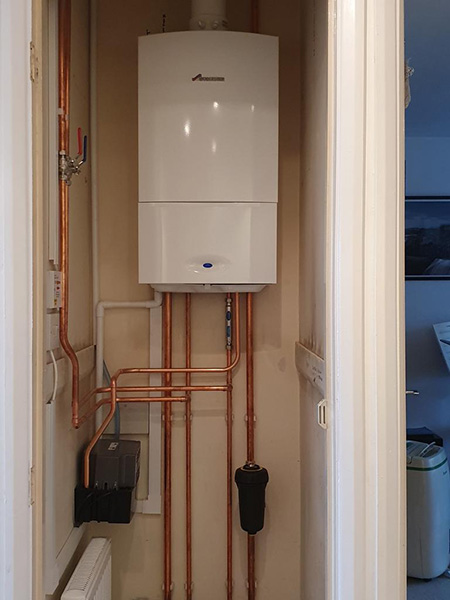
Noisy Boiler: Kettling, Banging and Whistling Explained
Boilers make some noise, but a change in noise is always information. A rumble that sounds like a kettle boiling, a rhythmic banging when the heating starts, a constant whistle, or a mechanical whine each come from a different place in the system. Identifying the noise correctly avoids paying for the wrong repair.
Low Water Pressure Around the House: Where to Start
Low water pressure is one of those complaints where the cause could be outside your boundary, inside your loft, or in a single tap. The useful first step is deciding whether the problem affects the whole property or just one outlet, because that single answer splits the diagnosis in two completely different directions.
Leaking Radiator or Valve: Stop the Damage First
Radiator leaks tend to start small — a damp patch on a valve nut, a rusty ring on a carpet — and stay small for weeks before they get worse quickly. Because the water is inhibited and often black with magnetite, it stains permanently, so isolating it early matters as much as the repair itself.
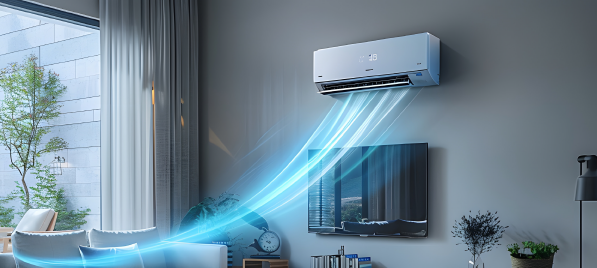
Air Conditioning Not Cooling Properly
An air conditioning system that runs but doesn't cool is rarely broken in a dramatic way. In most cases airflow has been restricted somewhere, or the refrigerant charge has dropped because of a small leak. Both are diagnosable in a single visit, and handling refrigerant legally requires F-Gas certification — which is why this is not a DIY job.

You Can Smell Gas: What to Do Right Now
This page exists to give you the right action in the right order, not to sell you anything. If you can smell gas in or around your property, the National Gas Emergency Service is the first call — free, 24 hours a day, on 0800 111 999. Everything else, including us, comes afterwards.
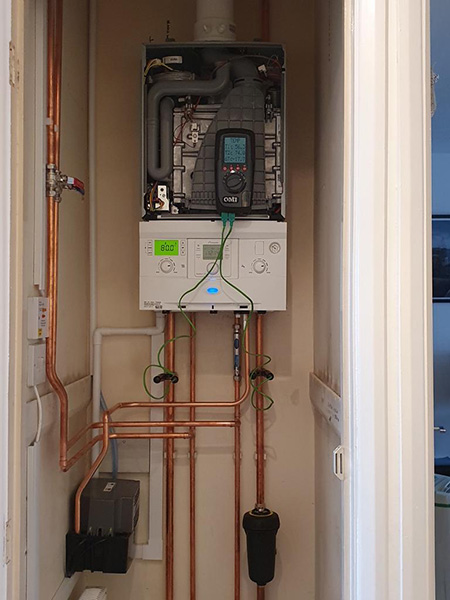
Heating Not Coming On: Controls, Valves and Power
Heating that won't start while hot water works normally points away from the boiler and towards the controls and the heating circuit. A large share of these call-outs are resolved without any parts at all — flat thermostat batteries and programmers that reset after a power cut are genuinely common. The rest are usually a motorised valve or a pump.
Replacing an Old Back Boiler or Floor-Standing Boiler
Back boilers sit behind a gas fire in the chimney breast and were fitted in enormous numbers into the 1990s. They are reliable in the way old machinery is reliable — and profoundly inefficient, with parts increasingly hard to source. Replacing one is a bigger job than a straight combi swap, and knowing what's actually involved prevents nasty surprises mid-week.