
Power Shower or Standard Mixer Shower
A power shower adds a pump to boost flow from a low-pressure supply; a standard mixer relies on whatever pressure the system naturally provides.
A power shower adds a pump to boost flow from a low-pressure supply; a standard mixer relies on whatever pressure the system naturally provides. The comparison only matters where pressure is genuinely limited.
The case for a standard mixer
Where the hot water source is already mains-fed or a modern pumped system, adding a further pump is unnecessary complexity and cost.
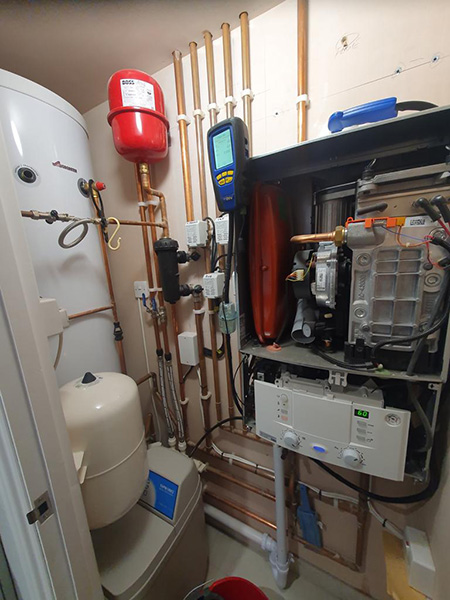
The case for a power shower
Gravity-fed vented cylinder systems with genuinely weak natural pressure gain the most from an integral pump lifting flow to a comfortable level.
Which wins when
Check your existing pressure first. Fitting a power shower onto a system that already has good pressure adds noise and cost for little real gain.
What we check before recommending a pump
- Whether the system is gravity-fed or already pressurised
- Height and layout between cylinder, tank and shower
- Electrical supply for the pump
Who does the work
- Gas Safe registered engineers — registration 554328
- Worcester Bosch accredited installer
- John The Plumb Ltd, company registration 10026483
Get a pressure check before choosing
Tell us how your hot water is currently supplied and we'll confirm whether a pump would genuinely help.
Questions we get asked
Can a power shower be fitted on an unvented cylinder?
It's rarely needed, since unvented cylinders already run at mains pressure — a pump would be solving a problem that isn't there.
Are power showers noisier?
Yes, the pump itself is audible, which is a fair trade some households make for the flow increase and others don't.
Will a power shower work during a power cut?
No, because the pump needs electricity, unlike a purely gravity-fed shower which will still trickle without power.