
Emergency Plumber Guide: What Counts, What to Do First
Not everything that goes wrong with plumbing is an emergency, and treating a slow drip like a burst main helps nobody.
Not everything that goes wrong with plumbing is an emergency, and treating a slow drip like a burst main helps nobody. A genuine plumbing emergency is one where water is causing damage right now, where you have no heating or hot water in conditions that make that unsafe, or where gas is involved. Knowing which category you are in, and what to do in the first five minutes, often makes the difference between a small repair and a ceiling coming down.
What actually counts as an emergency
Uncontrolled water is the clearest case: a burst pipe, a failed flexible tail under a sink, water coming through a ceiling, or an overflow that will not stop. A total loss of heating in freezing weather counts when there are young children, elderly or vulnerable people in the property. A suspected gas leak or carbon monoxide alarm is never a plumbing call at all — it goes to the National Gas Emergency Service on 0800 111 999 first. A dripping tap, a slow-filling cistern or a single cold radiator can wait for a normal appointment.
The first five minutes matter more than the phone call
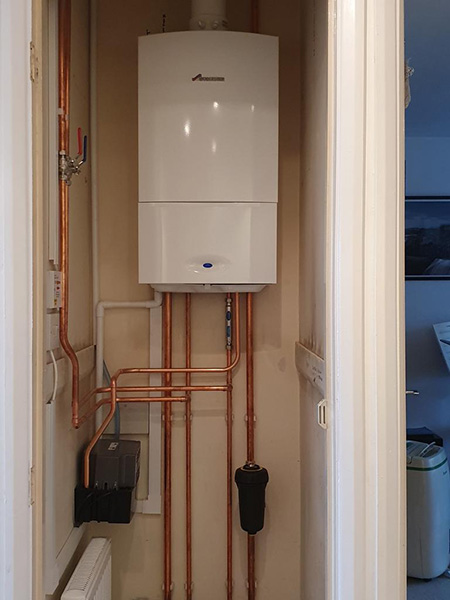
Turn the water off before anything else. The internal stopcock is usually under the kitchen sink, sometimes in a downstairs cloakroom or utility. Isolate the appliance if the leak is local, using the small isolation valve on the pipe feeding it. If water is anywhere near lighting, sockets or a consumer unit, turn the electricity off at the consumer unit. Then open the lowest cold tap in the house to drain the remaining water in the pipework away from the leak.
Containing damage while you wait
Get containers under the drip, move furniture and electricals out of the way, and lift carpets or rugs where you can. If water is pooling above a plaster ceiling, a single small hole made deliberately in the lowest point will let it drain in a controlled way instead of the ceiling collapsing. Take photographs of the damage as you go, because insurers ask for them and it is far easier to record it now than to reconstruct it later.
What to tell the plumber on the phone
Say what is leaking, where the water is coming from, whether you have managed to turn the water off, and whether the property is occupied. Say if the leak involves the heating system rather than the mains, because they are isolated differently. Say if there is electricity involved. That information decides what an engineer brings in the van and whether the job needs to be attended before anything else on the list.
No heating and no hot water
A boiler lockout in mid-winter is urgent but not always dangerous. Before calling, check whether the pressure gauge has dropped below the normal band, whether the thermostat has power and is calling for heat, and whether the condensate pipe outside is frozen — that last one is the single most common cause of winter lockouts and can often be thawed safely with warm, not boiling, water poured over the exposed pipe. If none of those apply, it needs an engineer.
Preventing the next one
Most emergency calls trace back to something that gave warning first: a weeping joint, a flexible tap connector well past its life, a stopcock that has not been turned in fifteen years, or a system that lost pressure repeatedly and was topped up rather than investigated. Knowing where your stopcock is and checking it turns, replacing old flexible connectors, and lagging exposed pipework prevents more emergencies than any other single measure.
Do these first in a plumbing emergency
- Turn off the internal stopcock
- Isolate the specific appliance if the leak is local
- Switch off electricity if water is near sockets or lighting
- Open the lowest cold tap to drain the pipework
- Contain the water and move valuables clear
- Photograph the damage for your insurer
- Call 0800 111 999 first if you smell gas
- Have your boiler make and model to hand when you call
Who does the work
- Gas Safe registered engineers — registration 554328
- Worcester Bosch accredited installer
- John The Plumb Ltd, company registration 10026483
Water where it should not be?
Turn the stopcock off first, then call us and describe what you can see — we will tell you honestly whether it needs attending now.
Questions we get asked
Where is my stopcock likely to be?
Most often under the kitchen sink. Failing that, check a downstairs cloakroom, utility room, under the stairs, or near where the mains enters the property. There is also an external stop valve at the boundary, usually under a small metal cover.
My stopcock won't turn — what now?
Do not force it, as old brass valves can shear. Use the external stop valve at the boundary instead if you can reach it, and have the internal one replaced once the immediate problem is dealt with.
Is a leaking radiator an emergency?
Usually not. A radiator leak is on a closed system with limited water in it, so containing the drip and closing both radiator valves normally holds it until a booked appointment.
Should I call an emergency plumber for no hot water?
If you also have no heating in cold weather and there are vulnerable people in the property, yes. Hot water alone is generally something that can be booked normally.
What should I not attempt myself?
Anything on the gas side, anything inside a boiler casing, and any work on an unvented cylinder. All three need specific qualifications and can be genuinely dangerous.