
Replacing Radiators Without Replacing the Boiler
You don't need a new boiler to replace tired or undersized radiators, but the existing boiler's output and the system's balance need considering so the change actually improves comfort..
You don't need a new boiler to replace tired or undersized radiators, but the existing boiler's output and the system's balance need considering so the change actually improves comfort.
Why radiator size still matters with an existing boiler
A larger or more efficient radiator in one room changes the flow demand across the whole system, so it's worth checking the boiler can still support the change.
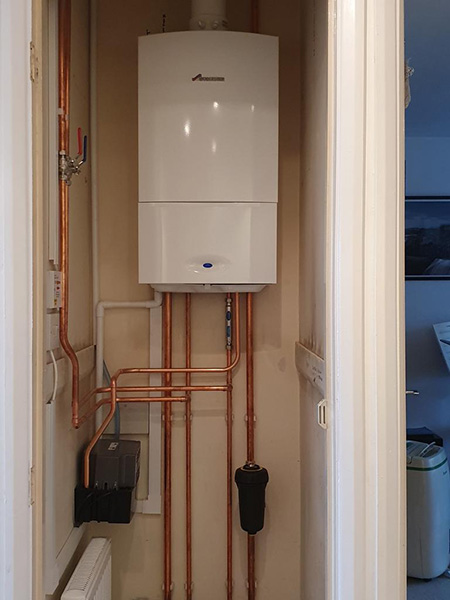
Common reasons to replace radiators
Corroded panels, insufficient output for a room's heat loss, or simply wanting a different style are all valid reasons independent of the boiler's condition.
What the job typically involves
Isolating and draining the affected radiator, fitting the new one, and rebalancing that part of the system afterwards.
Things worth checking before replacing radiators
- Whether the new radiator's output matches the room's heat loss
- Condition of the existing pipework and valves
- Whether the system will need rebalancing afterwards
Who does the work
- Gas Safe registered engineers — registration 554328
- Worcester Bosch accredited installer
- John The Plumb Ltd, company registration 10026483
Planning radiator upgrades
Tell us which radiators you're looking to replace and we'll check they'll suit both the room and your existing boiler.
Questions we get asked
Will bigger radiators overload my existing boiler?
Usually not for a small number of radiators, but replacing many at once is worth checking against the boiler's total output.
Can I replace just one radiator without draining the whole system?
Often yes, using isolation valves fitted to that radiator, avoiding a full system drain.
Should I flush the system while replacing radiators?
If the old radiator shows signs of sludge, it's a sensible time to consider a flush, since the system is already partly drained.