
Air Source Heat Pumps and What They Ask of a House
A heat pump moves heat rather than making it, which is why it can deliver more energy than it consumes.
A heat pump moves heat rather than making it, which is why it can deliver more energy than it consumes. It also runs at much lower flow temperatures than a boiler, so the house has to be able to heat itself with cooler water.
The flow temperature problem
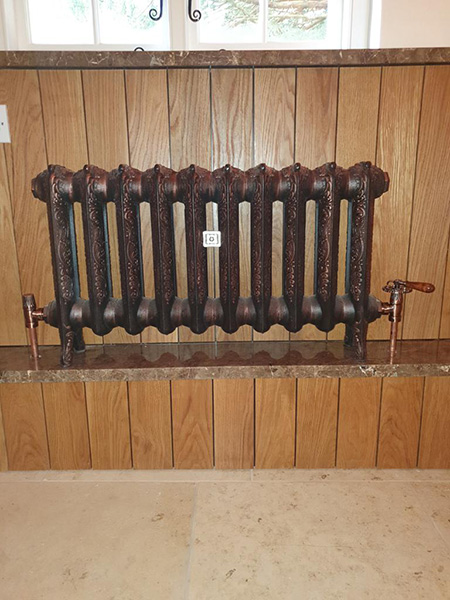
A radiator that was sized for 70°C water gives far less output at 45°C. Emitters usually have to grow, or the fabric has to improve, before a heat pump is comfortable.
Hot water is different too
Heat pumps make hot water more slowly and need a cylinder with a large coil. A standard old cylinder is rarely suitable.
Siting realities
Outdoor unit clearance, noise to neighbouring windows, condensate freezing in winter and a route for large-bore pipework into the plant space.
Honest suitability checks
- Room-by-room heat loss, not a rule of thumb
- Whether emitters can be upsized where needed
- Somewhere sensible for the outdoor unit and cylinder
Who does the work
- Gas Safe registered engineers — registration 554328
- Worcester Bosch accredited installer
- John The Plumb Ltd, company registration 10026483
Ask about heat pump suitability
We would rather tell you a heat pump is wrong for your property than install one that never keeps you warm.
Questions we get asked
Will a heat pump work in an older house?
It can, but only after a proper heat loss calculation. We will say if the fabric makes it a poor decision rather than sell you one anyway.
Do heat pumps work in cold weather?
Yes, with reduced output. Sizing is done against the coldest design condition, not the average day.
Can I keep my boiler as well?
A hybrid arrangement is possible and is covered on its own page.